Content Developement
Virtual Laboratory, Indian Institute of Technology, Kharagpur, India
2021 - present
Interactive Learning for undergraduate and postgraduate engineering students.
Experimental Biochemistry
Interactive Learning for undergraduate and postgraduate engineering students.
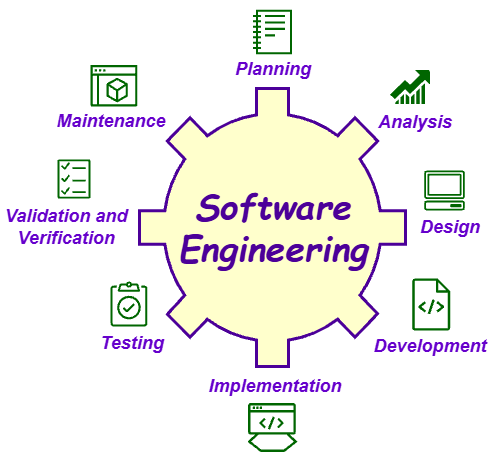
Software Engineering
Interactive Learning for undergraduate and postgraduate engineering students.
Mine Automation and Virtual Reality
Interactive Learning for undergraduate and postgraduate engineering students.
Digital Electronics Circuits
Interactive Learning for undergraduate and postgraduate engineering students.

Science, Maths, and Environmental Science
Interactive Learning for primary and secondary students.
Others
Implementation of smart office and smart transportation
Jan 2019 - March 2019
Malmö University, Malmö, Sweden
A smart office is implemented that helped in reducing energy consumption in our daily life. A smart transportation is implemented to determine the distance of n object and to sense certain aspects of its neighbourhood by emitting infrared radiations. The ultrasonic sensor is used to detects an object and the IR sensors are used to follow the path.
Language: C
Tool: Arduino
Sensors: LDR, Thermistor, DHT22, Sound, Ultrasonic and IR sensors,
Determining dimension (Height and Width) of an object in a cropped image captured using Axis Camera
Nov 2018 - Jan 2019
Malmö University, Malmö, Sweden
The project focuses on obtaining the dimensions of objects captured within a specified (cropped) region of an image sourced from a live video stream of an Axis camera. Within the client application, the received image is first cropped to a predefined area of interest to isolate the region relevant for analysis. The system then performs object detection within this cropped section, identifying the target object. Once detected, the application calculates the object’s height and width by implementing contour detection techniques to outline the object’s boundaries accurately. Using this contoured area, the system further computes measurements such as the distance between a known reference object and an unknown object present within the specified region, enabling precise dimensional analysis.
Languages: C, Java
Development of an online knowledge management system (KMS) for college
June 2014 - July 2014
Ardent Computech Pvt. Ltd. India
The project is aimed at developing an online knowledge management system that is of importance to either an organization or a college. The system (KMS) is an online application that can be accessed throughout the organization or college. This system can be used as a knowledge/information management system for the college. Students logging in should be able to upload any kind of technical document. Students logging in may also access/search any information put up by others. KMS should have super users for approval of documents uploaded by others.
Languages: HTML, CSS, JavaScript, MySQL, PHP
Development Of Mobile Applications
Dec 2013 - Jan 2014
Indian Institute of Technology, Kharagpur, India
The objective is to develop an application where all the details of a particular apartment or buildings can be stored and be accessed by the registered users.
Language: Java
Tool: Android Studio
Implementation and Analysis of Sorting Algorithms
June 2013 - July 2013
Indian Institute of Technology, Kharagpur, India
The main objective is to compare the different types of sorting algorithms and differentiate each sorting on the basis of time complexity.